

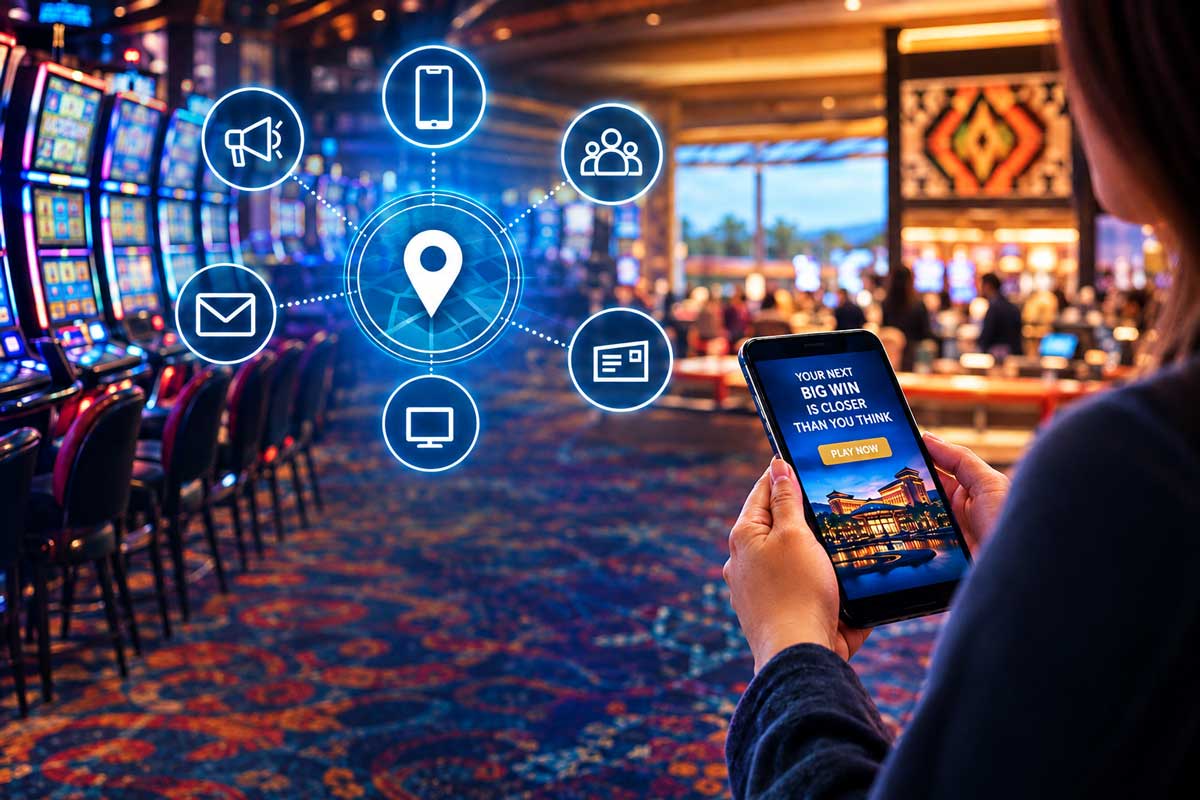
Casino marketing is changing quickly. Players are more connected, marketing technology is becoming more sophisticated, and casinos have more ways than ever to understand how customers discover, evaluate, and interact with a property. That creates both opportunities and challenges for tribal casinos. Marketing teams have to balance proven strategies such as television, radio, direct mail, and outdoor advertising with newer tools such as artificial intelligence, mobile marketing, location-based targeting, and data-driven personalization.
Looking toward 2027, the most effective tribal casino marketing strategies are likely to focus less on choosing one channel over another and more on connecting the right channels, audiences, messages, and data. Here are seven trends casino marketers should be watching.
1. Data-Driven Personalization Will Become More Important
Casino marketing has always relied heavily on customer data. Player loyalty programs, visitation frequency, spending habits, game preferences, and demographic information have helped casinos determine which guests receive specific offers and communications. What’s changing is how casinos use that information to shape their broader marketing strategy.
Recent industry discussions have emphasized the growing importance of data-driven personalization and unified customer profiles. Instead of treating every customer the same, casinos can use available data to develop more relevant messages and experiences across email, mobile, direct mail, digital advertising, and other channels. For marketers, the goal isn’t simply to collect more information. It is to turn useful information into better decisions: who to reach, when to reach them, what message to use, and which channel makes the most sense.
2. Mobile and Omnichannel Marketing Will Continue to Grow
A casino customer’s relationship with a property doesn’t begin when they walk through the front doors. A player might discover a casino through a social media post, visit its website, receive an email, interact with a mobile app, see an advertisement while traveling, and eventually visit the property. Each interaction becomes part of the overall customer journey.
Industry discussions in 2026 have emphasized mobile-first loyalty programs, casino apps, digital wallets, and connected guest experiences. That means tribal casino marketing strategies will increasingly need to connect multiple touchpoints rather than treating digital advertising, loyalty, social media, and traditional advertising as completely separate campaigns. The objective is a consistent experience whenever the customer encounters the casino.
3. Artificial Intelligence Will Become a Marketing Tool, Not Just a Buzzword
Artificial intelligence is already becoming part of casino operations and marketing, and its role is likely to expand through 2027. AI can help marketing teams analyze large volumes of data, identify audience patterns, develop creative variations, automate certain communications, and optimize campaigns more efficiently. The important distinction is that AI doesn’t replace marketing strategy. It gives marketing teams additional tools for analyzing information and executing campaigns. For tribal casinos, that could mean using AI to identify audience trends, improve segmentation, personalize communications, analyze campaign performance, and help determine where marketing dollars are producing the strongest results.
AI is also changing how consumers search for information. People increasingly use conversational tools and AI-powered search experiences to ask questions about destinations, entertainment, restaurants, hotels, and casinos. Industry marketing coverage in 2026 has specifically identified the changing search landscape as an issue casino marketers need to address.
4. Search Marketing Will Expand Beyond Traditional Google Results
Search engine optimization remains important, but the way people find businesses is evolving. A potential casino guest may search Google for a casino near them, ask an AI assistant for casino recommendations, search for an upcoming concert, look for hotel packages, or ask about restaurants and entertainment at a property. That means casino websites need to provide useful, authoritative information that can be understood by both traditional search engines and newer AI-powered discovery systems. Strong casino SEO should go beyond simply targeting phrases such as “casino near me.” Content can answer the questions potential guests actually ask about gaming, entertainment, dining, hotels, promotions, events, player programs, and the overall property experience. For tribal casino marketers, this creates an opportunity to make the casino website a larger part of the customer journey rather than simply a digital brochure.
5. Location-Based Marketing Will Become More Precise
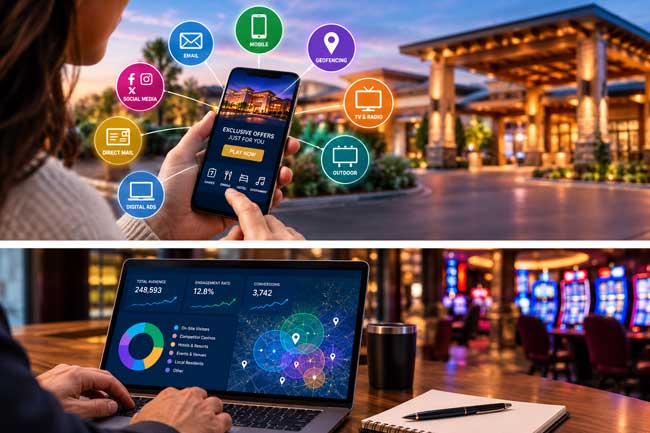
Location intelligence is especially valuable in casino marketing because physical location often provides important context. A customer visiting your casino is different from someone who has never been to the property. A person visiting a competing casino may represent a different marketing opportunity than someone who lives several hours away. Someone attending a major sporting event, concert, or other attraction could represent another potential audience. Geofencing allows marketers to create audiences based on where people have visited and incorporate that into broader digital campaigns.
Velocity’s ANNEX platform is designed around this concept, using geofencing and data to help casinos understand and reach audiences connected to specific locations. Velocity’s existing casino geofencing strategy also demonstrates how location-based audiences can be incorporated into digital advertising, direct mail, and other marketing efforts. The larger trend is toward more precise audience targeting. Rather than simply asking how many people saw an advertisement, marketers can increasingly ask which audience saw it, where that audience came from, and what happened afterward.
6. Traditional Media Isn’t Going Away
The growth of digital marketing does not mean television, radio, print, direct mail, and outdoor advertising have become irrelevant. In fact, discussions in the tribal gaming industry in 2026 specifically addressed the importance of balancing digital precision with the broad reach of traditional channels. Broadcast, outdoor, and other high-reach media can remain particularly valuable in regional and rural markets. The more useful question for casino marketers is not whether digital or traditional advertising is better. It is how the channels can work together.
A direct-mail offer can be reinforced through digital advertising. A television campaign can drive consumers to a website. An outdoor campaign can increase awareness while location-based advertising provides additional digital exposure. An event promotion can use social media, radio, email, and mobile advertising simultaneously. Integrated campaigns give casinos more opportunities to reach customers throughout the decision-making process.
7. The Casino Brand Will Need to Sell the Entire Experience
Casino marketing is no longer limited to gaming. Modern tribal casino properties can offer restaurants, hotels, concerts, sporting events, entertainment, spas, retail, golf, family attractions, and other experiences. Industry observers have also pointed to the continued diversification of entertainment and the importance of experiences that extend beyond traditional casino gaming. That creates a broader marketing opportunity. Instead of focusing every campaign on gaming, casinos can market the property as an overall destination. A customer may visit for a concert and discover the restaurants. Another may book a hotel for an event and become a loyalty member. Someone may visit for dining and return for entertainment. The strongest casino marketing strategies can connect these experiences while maintaining a consistent brand identity. For tribal casinos specifically, that brand can also communicate the property’s connection to its community, culture, hospitality, and surrounding region. The result is a marketing strategy that promotes more than a gaming floor. It promotes the destination and the experience surrounding it.
Preparing for the Future of Tribal Casino Marketing
The biggest change coming to casino marketing may not be a single new technology or advertising platform. It may be the continued integration of everything casinos are already using.
Data can inform audience targeting. AI can help analyze that data. Geofencing can provide location-based insights. Digital advertising can deliver personalized messages. Direct mail can reinforce those messages. Television, radio, and outdoor advertising can build broad awareness. Websites, mobile experiences, and social media can keep customers engaged between visits. That creates a connected marketing ecosystem rather than a collection of disconnected campaigns. For tribal casinos planning their 2027 marketing strategies, the opportunity allows evaluation of how each channel contributes to the customer journey and how those channels can work together to attract new guests, reconnect with existing players, and build long-term loyalty.
The future of tribal casino marketing isn’t about abandoning what has worked in the past. It’s about combining proven strategies with better data, smarter technology, and more precise ways to reach the right audiences.